Sub-Zero Series · Wine Storage · Out-of-Warranty · Southern California

Sub-Zero wine storage repair (current)

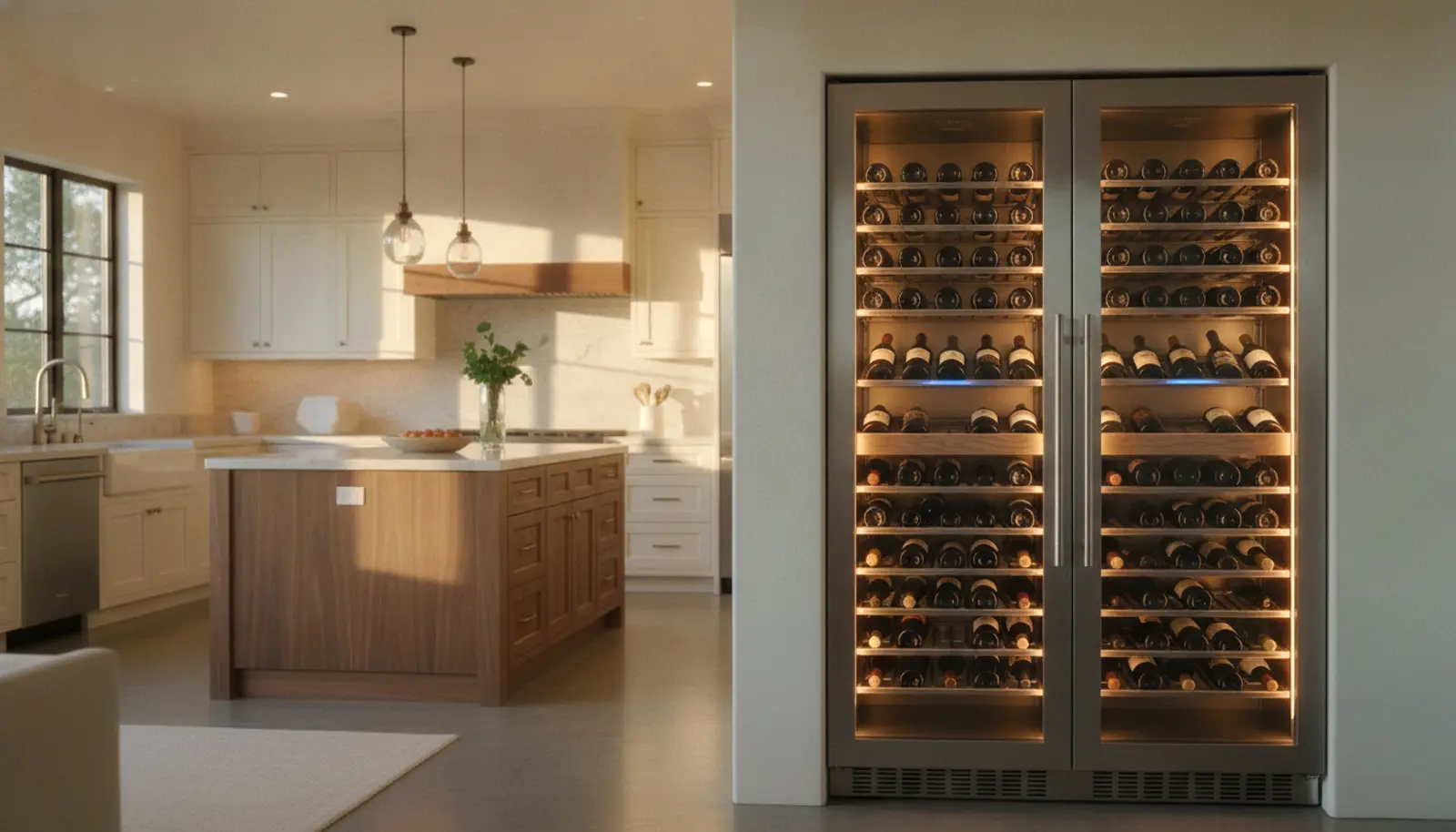
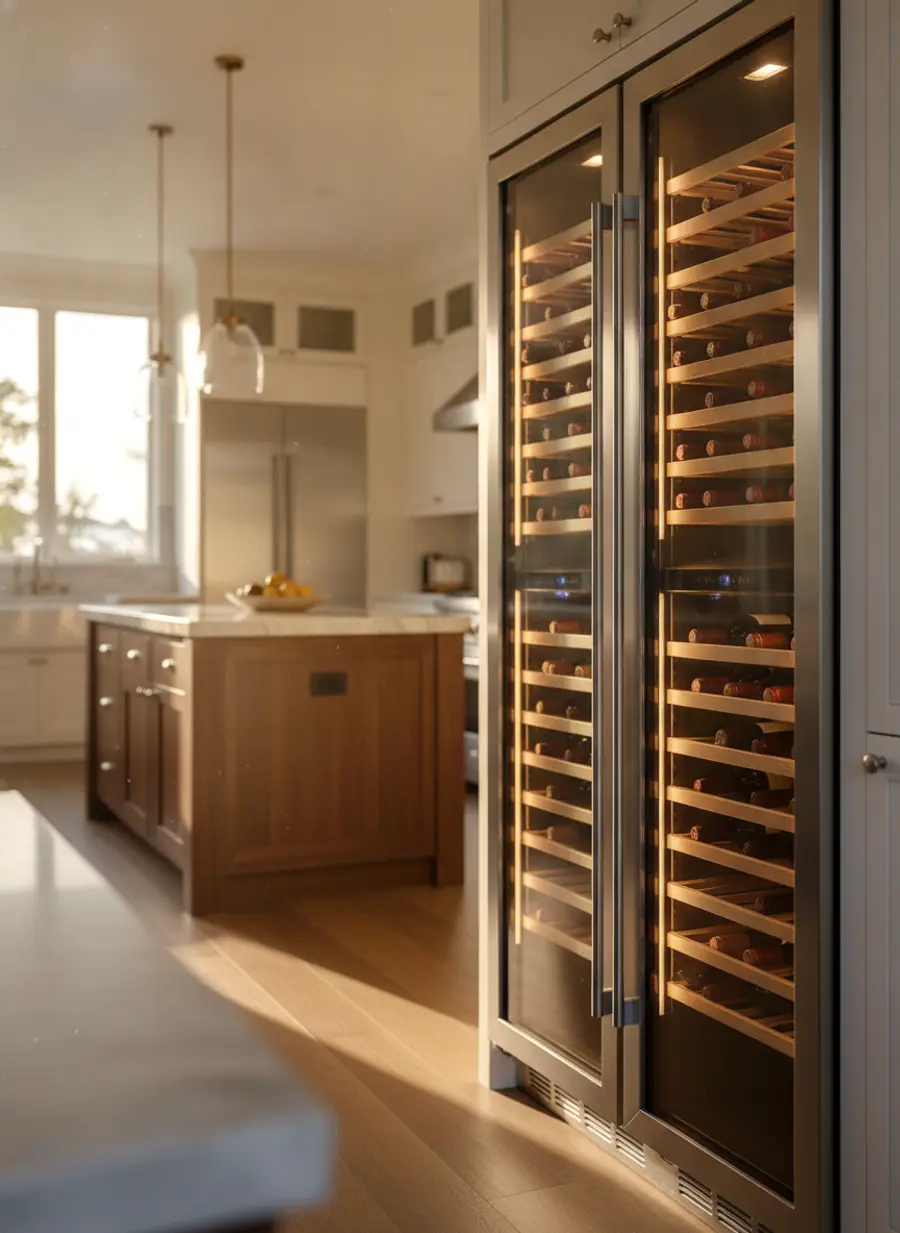
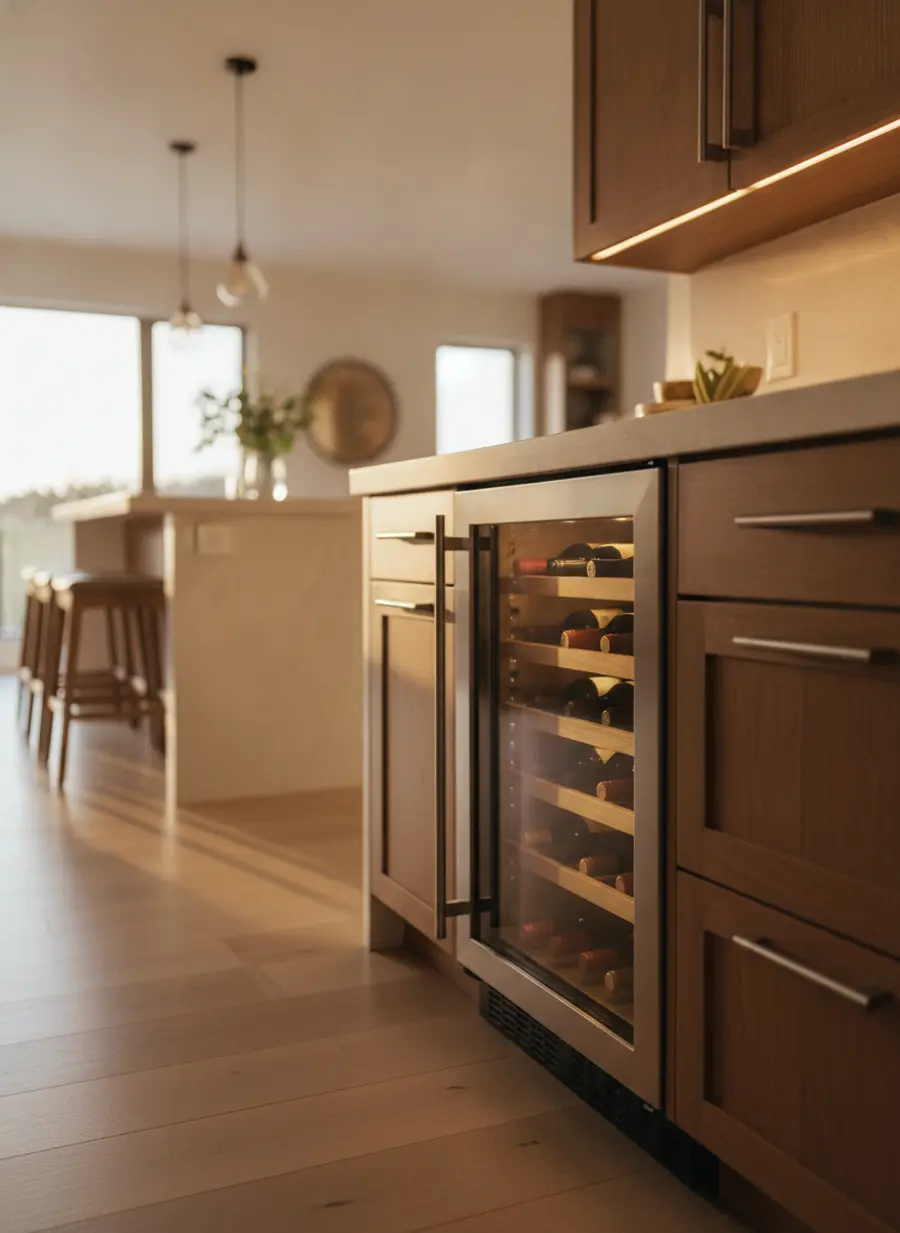
Sub-Zero's current wine storage spans Designer and Classic wine columns and undercounter units, built around dual-zone control and a UV-tinted glass door to hold wine at a stable temperature and humidity. Our techs at Sub-Zero Refrigerator Repair service these out of warranty, where precision is the whole point — small drifts and a tired seal matter more than they would in a refrigerator.

Mon–Sat 8am–8pm · Sun closed · Requests 24/7 online, phone & chat

Series identity

What a Wine Storage is

Era
current
Configuration
Designer + Classic wine columns / undercounter; dual-zone, UV glass
Status
Current line

Current wine units carry a W in the model — for example DEC3050W (a Designer wine column), CL2450W (a Classic wine unit), 315W, and UW24. The UV-tinted glass door and the dual-zone layout are the visual and functional signatures.

What separates a wine unit from a beverage refrigerator is the tolerance it has to hold: stable temperature, controlled humidity, and protection from light and vibration, often across two independent zones for reds and whites. That precision is the feature — and it's also why a fault that would be trivial in a refrigerator deserves attention here.

Models we service

  • DEC3050W
  • 315W
  • CL2450W
  • UW24

What tends to fail

What tends to fail on a wine unit

Dual-zone temperature drift

These units control two zones independently, so one zone drifting warm while the other holds is the classic fault — and a useful one, because it points straight at that zone's sensor, damper, or airflow rather than the whole system.

UV-glass door seal

A wine unit leans on its gasket and UV-tinted glass door to hold both temperature and humidity. A worn seal lets warm, humid air in, which shows up as drift, condensation, and a compressor that runs too often.

Evaporator and fan

A tired evaporator or a weak fan means cold air can't circulate evenly past the bottles, producing warm spots or, at the other extreme, icing on the back wall.

Temperature sensing

A wine cabinet is only as accurate as its sensors. A drifting sensor tells the control the wrong temperature, so the unit over- or under-cools while reporting that everything is fine.

Vibration

Vibration is uniquely bad for stored wine, so a new hum or a failing fan mount is worth resolving here for the sake of the bottles, not just the machine.

How we approach it

How we approach a wine unit

  1. Read each zone separately

    On a dual-zone unit we check the zones independently, because a single warm zone narrows the fault fast and keeps a healthy zone untouched.

  2. Verify what the control senses

    We confirm each zone's sensor is reading the real temperature before assuming the refrigeration is at fault.

  3. Check airflow, evaporator, and the glass seal

    Warm spots and icing live here; we read the airflow path and the UV-glass door seal rather than swapping parts blindly.

  4. Address vibration

    We track down new noise or vibration and resolve it, because settled, still storage is part of what a wine unit is for.

  5. Confirm humidity, not just temperature

    We make sure the unit is holding humidity as well as temperature, since dry air dries corks and lets bottles seep — a wine-specific check that a plain refrigerator diagnosis would skip entirely.

Repair or replace

Built-in wine is worth saving

Replacing built-in wine storage is expensive and disruptive — it's cabinetry, not a freestanding appliance — so repair is almost always the right call for the common faults: a sensor, a fan, a gasket, a damper.

Beyond the cabinet, there's the collection it protects. A small drift caught early is far cheaper than the loss a failing wine unit can cause, which is why we treat a couple of degrees seriously.

For a serious cellar, the value of the bottles inside can dwarf the price of any repair, so the prudent move is to act on the first sign of drift rather than wait — and we're glad to advise honestly on whether what you're seeing warrants a visit yet.

Straight talk on price

Ranges are estimates (market average +35%); exact price confirmed on-site.

We quote ranges by model and fault, never a mystery flat fee, and you approve the work before we start.

Wine Storage questions

Sub-Zero wine storage FAQ

Why is one zone of my Sub-Zero wine cooler warm?

Because the two zones are controlled independently. When only one drifts off temperature, the fault is almost always in that zone — its sensor, airflow, or damper — rather than the whole refrigeration system. It points to a targeted, affordable repair and leaves the healthy zone alone.

How do I know if I have a current Sub-Zero wine unit?

Current wine units carry a W in the model number — DEC3050W, CL2450W, 315W, UW24 — and feature a UV-tinted glass door with dual-zone control. If yours is an older 400-series wine cabinet (like a 424 or 427), see the legacy wine page instead.

Why is my Sub-Zero wine fridge icing at the back?

Frost on the back wall points to a defrost or airflow issue, or warm humid air getting in past a worn door seal. On a wine unit it's worth catching early — beyond the energy waste, the humidity swings behind it are hard on labels and corks.

Does vibration really matter for a wine cooler?

For stored wine, yes. Constant vibration disturbs sediment and is generally considered bad for long-term storage, so a new hum or a failing fan mount is worth resolving here in a way it might not be in a regular refrigerator.

Do you repair both built-in and undercounter Sub-Zero wine units?

Yes. We service the current Designer and Classic wine columns and the undercounter wine units across the line. The dual-zone control and UV-glass door are common threads, and we diagnose them on their own terms.

How much does Sub-Zero wine fridge repair cost?

It depends on whether it's a sensor, a fan, a gasket, or the sealed system, so we quote ranges rather than a flat fee. Ranges are estimates (market average +35%); exact price confirmed on-site.

Tell us the model and what it's doing.

Mon–Sat 8am–8pm · Sun closed · Requests 24/7 online, phone & chat