Water supply and fill
The first thing to check. A restricted fill valve, a kinked or frozen line, or a clogged filter means the maker cycles but never fills — no ice, with nothing actually broken inside.
Sub-Zero Series · Clear-Ice Makers · Out-of-Warranty · Southern California
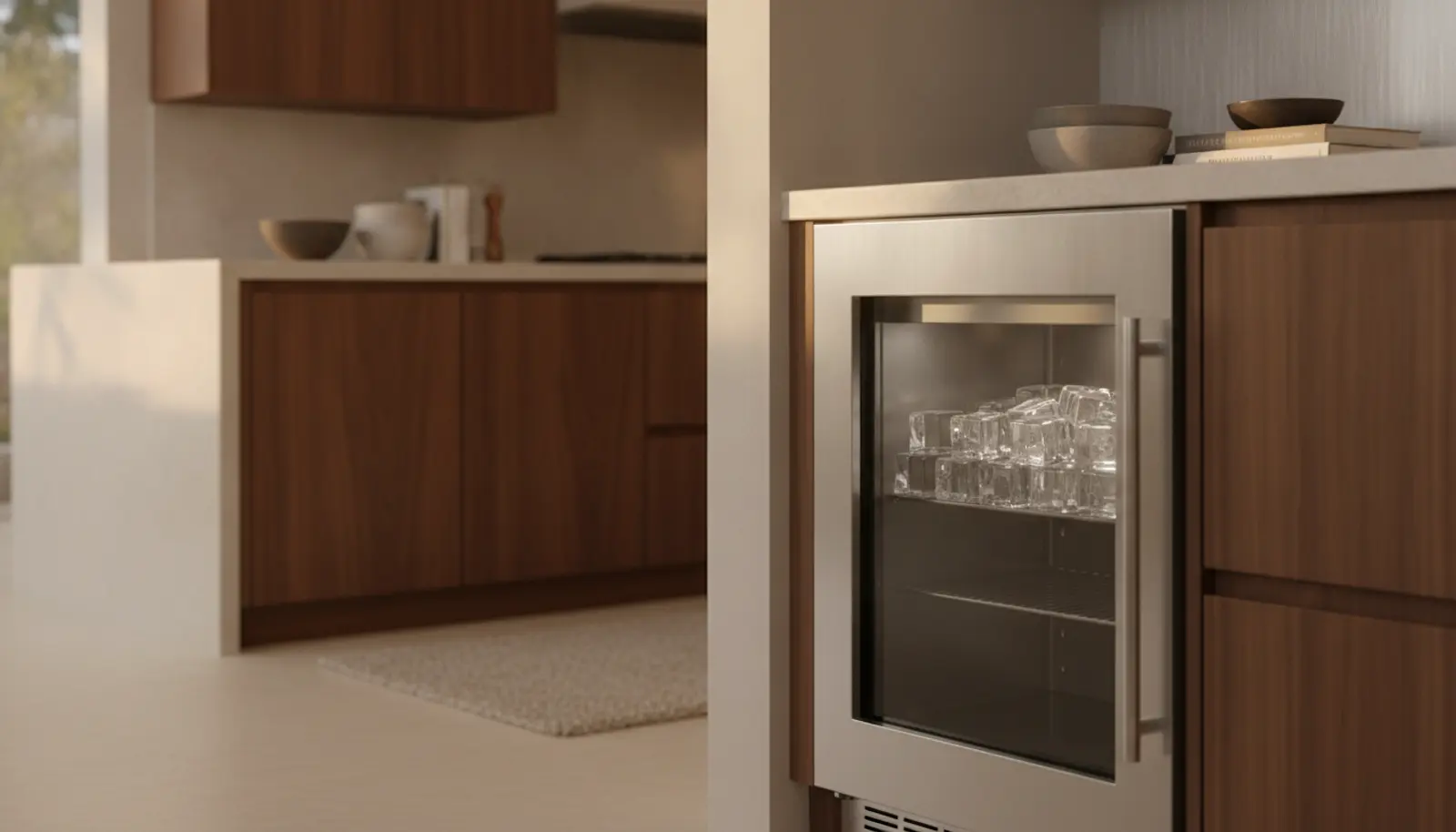
Sub-Zero's current ice makers are undercounter units built to produce clear ice on demand — a process that's more particular about water than most people expect. Our Sub-Zero techs at Zero Degree Built-In Refrigeration service these out of warranty, where the recurring issues are supply, the harvest cycle, and the scale that Southern California's hard water leaves behind.
Mon–Sat 8am–8pm · Sun closed · Requests 24/7 online, phone & chat
Start with the symptom
Explore the Sub-Zero series
How the Ice Makers (current) differs
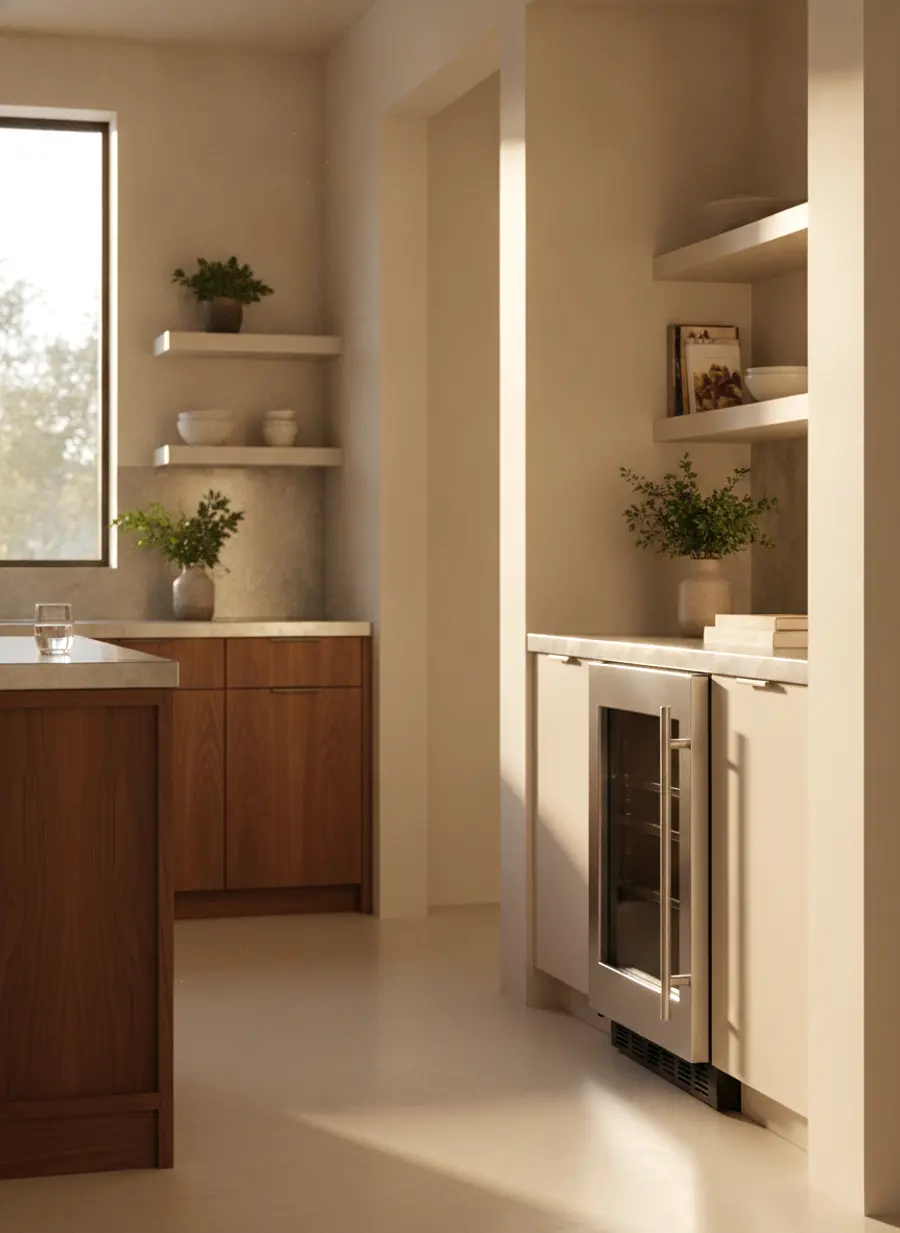
Undercounter clear-ice makers built for production and drainage — a standalone ice appliance, separate from the in-door ice of a built-in refrigerator.
Models we service — tap to view
Series identity
Current standalone ice makers are the undercounter UC15IP and 315I — dedicated clear-ice machines rather than the ice function built into a refrigerator. They install under the counter with their own water supply and drain.
The reason people buy a dedicated maker is the ice itself: a slow-freeze, clear-ice process makes dense, slow-melting cubes that a refrigerator's ice module can't match. That same process is what makes these units particular about water quality and flow — the feature and the failure mode are two sides of the same coin.
Models we service
What tends to fail
The first thing to check. A restricted fill valve, a kinked or frozen line, or a clogged filter means the maker cycles but never fills — no ice, with nothing actually broken inside.
Cubes form but won't release, so the maker freezes solid. The harvest mechanism or its heater has stalled, and diagnosing that stage is what separates a part swap from a full module.
Southern California water is hard, and the clear-ice process is sensitive to mineral content. Scale stiffens valves and clouds or shrinks cubes over time, so a descale and fresh filter is often the real fix.
A dedicated maker drains its melt, and a clogged or misrouted drain backs up into the bin or onto the floor. We check the drain path alongside the fill side, since a leak here is easy to misread as a production problem.
A maker that can't reach temperature has the same roots as any refrigeration fault — airflow, a fan, or the sealed system. We confirm it's actually getting cold before chasing the ice mechanism.
How we approach it
We confirm the maker is getting water at the right pressure — valve, line, filter — before touching anything inside.
Fill, freeze, harvest. Where it stalls tells us whether it's supply, harvest, or temperature, instead of guessing.
We confirm melt-water actually leaves the unit, since a backed-up drain imitates other faults and can quietly reach the cabinetry under an undercounter install.
Given our hard water, we look for scale that's dulling cube quality or stiffening the valve, which a descale resolves without a part.
Most faults are a valve, a heater, a line, or scale. We replace the full module only when the assembly itself has failed.
Repair or replace
Ice makers are one of the more reassuring repairs: the failure is far more often supply, harvest, or scale than the module itself, so a single component usually brings the maker back.
On our hard water, a regular filter habit and the occasional descale prevent most of these calls in the first place — and we'll always tell you when maintenance, not a part, is the actual answer.
When a dedicated maker does reach the end of its life, it's a standalone undercounter unit rather than part of a built-in cabinet, so replacement is far simpler than for an integrated appliance — but that's the exception, not the expectation, on these. You can see what an ice-maker repair usually costs by job before you call.
You pay fair, market-average rates: a Sub-Zero takes the same skilled work as any built-in, so you're not paying a premium for the badge.
Ranges are estimates by model and fault; the exact price is confirmed on-site, and you approve the work before we start. No flat fees, no surprises.
Ice Makers questions
It usually fails at one of three stages: water isn't reaching it, the harvest cycle won't release the cubes, or it isn't getting cold enough. We check supply first, because a fill valve or a clogged line is common and inexpensive, before ever recommending a new module.
On a clear-ice maker, poor cube quality almost always traces to water — supply, or scale from our hard local water — rather than a failed unit. The process that makes the ice clear is sensitive to flow and mineral content, so the fix is usually upstream of the maker.
The UC15IP and 315I are dedicated undercounter clear-ice machines with their own water supply and drain, whereas the ice in a refrigerator is a module built into the cabinet. They share failure modes — fill, harvest, scale — but a standalone maker is diagnosed as its own appliance.
Yes, considerably. Southern California's hard water leaves scale that stiffens valves and degrades the clear-ice process. On many calls the genuine fix is a descale and a fresh filter rather than a part, and a regular filter habit prevents a lot of trouble.
Most of the time, yes. The common faults — fill valve, harvest mechanism, heater, water line, or scale — are all serviceable on their own. We replace the full module only when the assembly itself has truly failed, and we'll tell you which it is first.
It depends on which stage has failed, so we quote ranges rather than a flat fee. You pay fair, market-average rates: a Sub-Zero takes the same skilled work as any built-in, so you're not paying a premium for the badge.
Related
Mon–Sat 8am–8pm · Sun closed · Requests 24/7 online, phone & chat