A setting or a loaded vent
The cheapest first check: a control nudged too cold, or produce pushed against the air inlet so it takes the full blast. Worth ruling out before assuming a part failed.
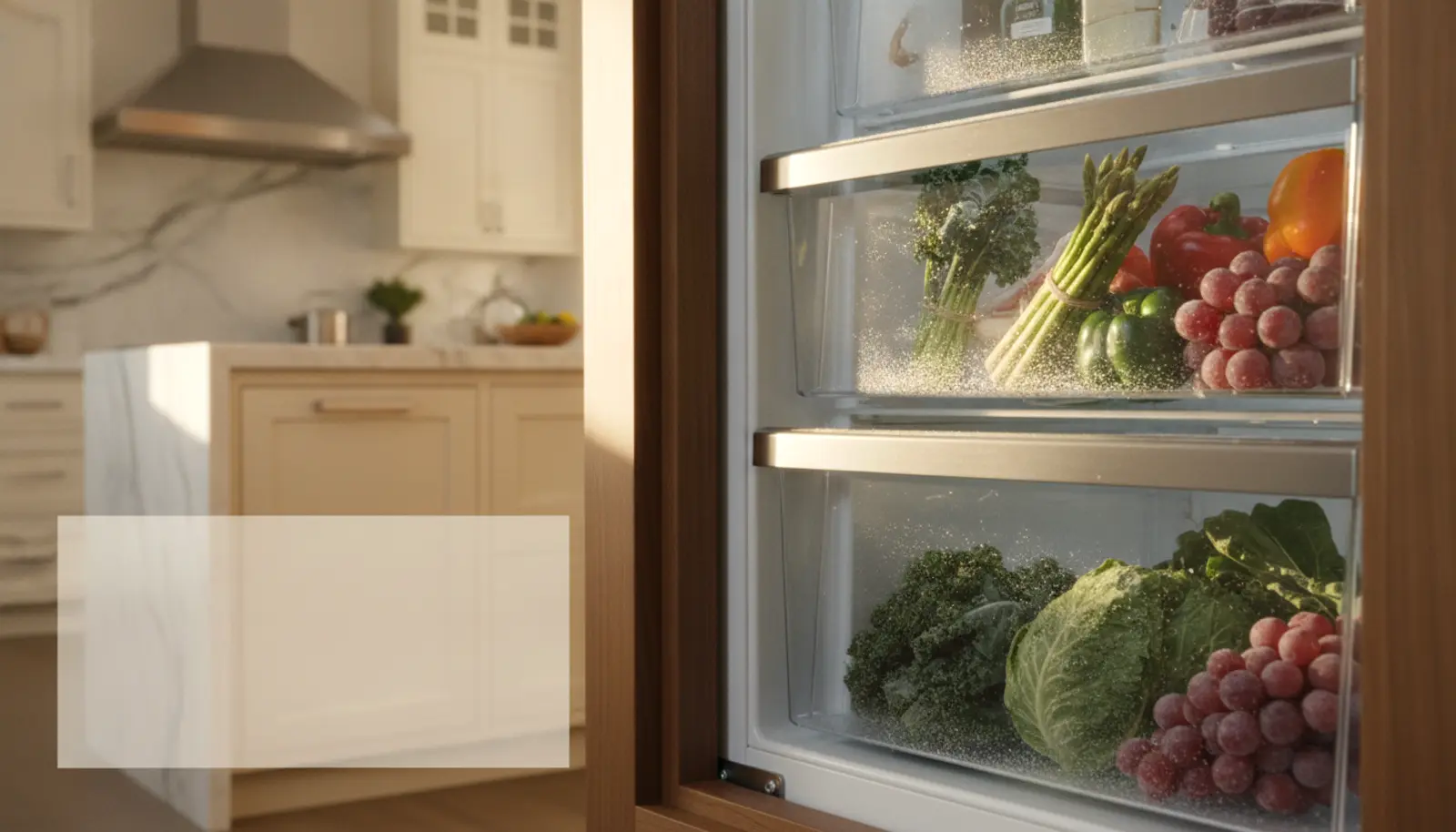
Sub-Zero Problems · Over-Freezing Food · Diagnostic · Southern California
When a Sub-Zero freezes food in the fresh-food compartment, too much cold air is reaching it — usually a setting that's too low, a stuck air damper, or a temperature sensor reading wrong. Our techs at Zero Degree Built-In Refrigeration check the cheap, common causes before pointing at the control board.
Mon–Sat 8am–8pm · Sun closed · Requests 24/7 online, phone & chat
The short version
Across the Southern California homes we cover, over-freezing in the refrigerator is almost always an airflow or sensing problem rather than a refrigeration failure — the system is working, it's just delivering too much cold to the fresh-food side.
Reading where the freezing happens tells us a lot. Items frozen only near the vent point to a damper or loading issue; food freezing throughout points to the temperature sensor or control. We start cheap and confirm before replacing anything.
When to call usIf the setting looks right and food still freezes — especially throughout the compartment, not just at the vent — a damper or sensor is the likely cause, and that's the point to call rather than keep adjusting the dial.

What's actually happening
The cheapest first check: a control nudged too cold, or produce pushed against the air inlet so it takes the full blast. Worth ruling out before assuming a part failed.
If the sensor tells the control the refrigerator is warmer than it is, the system keeps cooling and your food freezes at the back. A common cause of over-cooling, and a targeted fix.
The damper meters cold air into the refrigerator from the cold side. Stuck open, it floods the compartment with too much cold air — lettuce and milk near the vent freeze first.
Less often, the control itself mismanages the cycle. We confirm the sensor and damper before pointing at the board, because boards are the expensive answer.
How we diagnose
We start with the obvious — the temperature setting and whether food is blocking the air inlet — because the cheapest cause is also common.
Food freezing only near the vent points to airflow or a damper; food freezing throughout points to sensing or control.
We verify the control is reading the real compartment temperature, since a drifting sensor is a frequent cause of over-cooling.
We confirm the damper opens and closes properly rather than feeding constant cold air into the refrigerator.
If sensing and the damper are sound, we look at the control board — the least common and most costly cause.
Where we see it
Built-in over-and-under (U), side-by-side (S), all-fridge (R) / all-freezer (F) Highest repair volume legacy line. Dual Refrigeration, magnetic door latch, vacuum condenser.
Built-in side-by-side and over-and-under Variants -2 / -3 (e.g. 650-2/3, 685-3, 695-3).
Built-in side-by-side, over-and-under, all-fridge/all-freezer; iconic grille
Fully integrated columns (refrigerator/freezer), drawers, undercounter — flush cabinetry DEC = column, DET = drawers, DEU = undercounter, *W = wine.
Open the full series repair guide that matches your cabinet:
Repair or replace
Over-freezing rarely threatens a cabinet. A sensor or a damper is a focused, affordable repair, and even a control board is a component swap rather than a reason to replace a built-in that's otherwise sound.
The value of fixing it isn't just convenience — over-freezing wastes energy and ruins produce. We'll point you to the actual cause rather than have you chasing the dial.
It's also worth noting how easily over-freezing is mistaken for the opposite problem. A refrigerator that freezes the food nearest the vent while feeling warm elsewhere can read as "not cooling," when in fact the air distribution is the issue. Telling those apart on the first visit is exactly what a proper diagnosis is for, and it keeps you from paying to chase the wrong system. When you'd rather settle it than keep adjusting the dial, book a diagnostic and we'll confirm whether it's the damper, the sensor, or the control.
You pay fair, market-average rates: a Sub-Zero takes the same skilled work as any built-in, so you're not paying a premium for the badge.
Ranges are estimates by model and fault; the exact price is confirmed on-site, and you approve the work before we start. No flat fees, no surprises.
Over-freezing questions
Over-freezing in the fresh-food compartment usually means too much cold air is reaching it: a setting that's too low, food blocking the air inlet, a stuck-open damper, or a temperature sensor reading wrong so the system over-cools. Where the freezing happens — only near the vent versus throughout — helps tell airflow problems from sensing problems.
A little frost on items pressed right against the air inlet can happen, but produce and milk actually freezing is not normal. It usually points to a damper feeding too much cold air, or items loaded into the coldest spot. Moving them and watching is a fair first step; if it persists, the damper or sensor is the likely cause.
Sometimes, yes — a control bumped a notch too cold will over-freeze, and it's the first thing to rule out. But if the setting looks right and food still freezes, the cause is usually mechanical: a stuck damper or a sensor telling the system the box is warmer than it is.
We see it across the BI built-ins, the 600-series, and the current Classic and Designer lines — any cabinet that meters cold air into the fresh-food side through a damper and reads temperature through a sensor. Both are serviceable parts on these models.
It depends on whether it's a sensor, a damper, or a control, so we quote ranges by symptom rather than a flat fee. You pay fair, market-average rates: a Sub-Zero takes the same skilled work as any built-in, so you're not paying a premium for the badge. A sensor and a control board sit at different ends of the scale, and you'll know which before any work begins.
Related
Mon–Sat 8am–8pm · Sun closed · Requests 24/7 online, phone & chat