A clogged or frozen defrost drain
The most common leak. When the drain that carries defrost melt-water away clogs or freezes, water backs up and finds its way to the floor or pools inside the cabinet. Cheap to clear once we confirm that's the path.
Sub-Zero Problems · Leaking Water · Diagnostic · Southern California
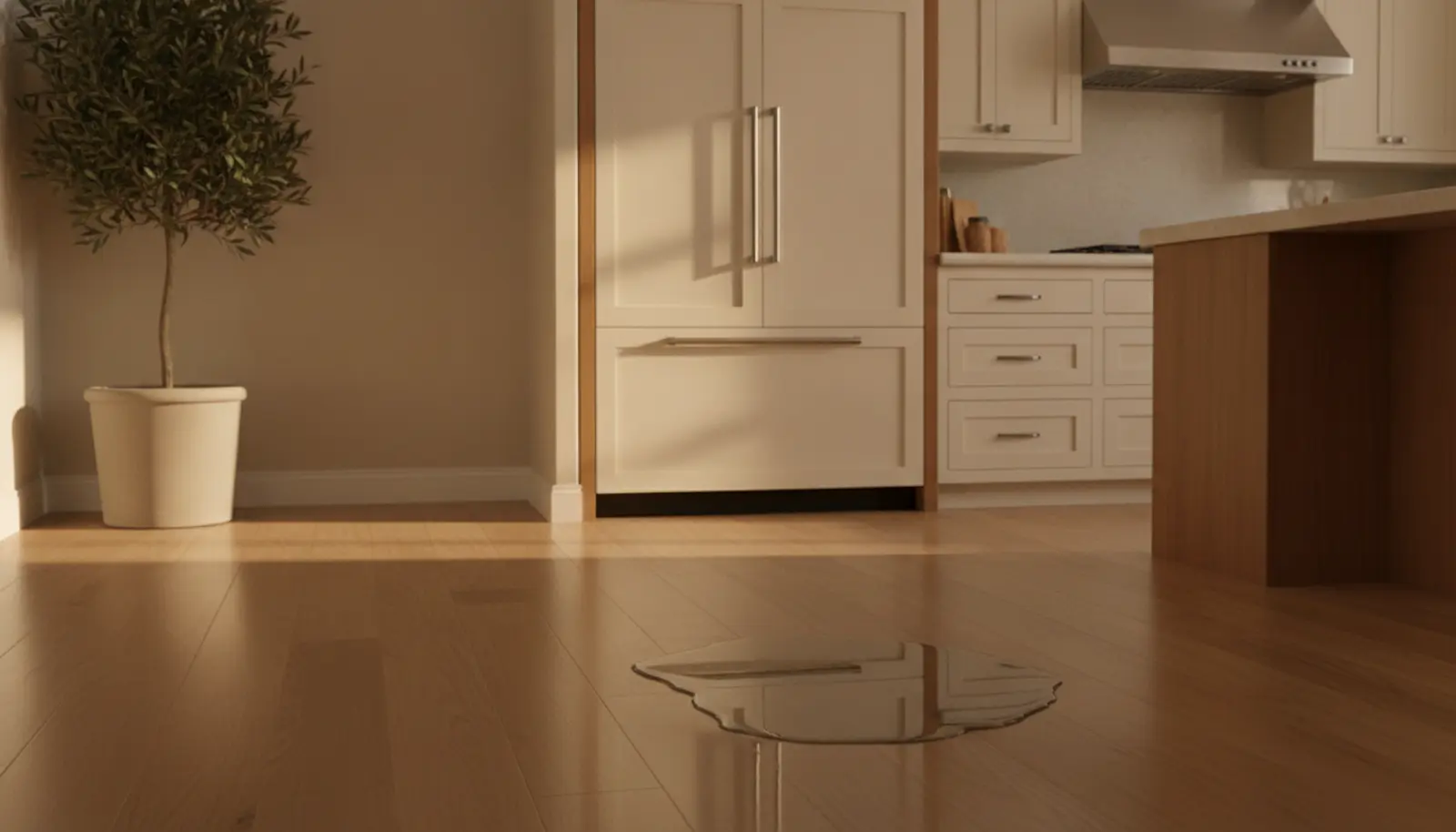
A leaking Sub-Zero almost always traces to one of three places: a frozen or clogged defrost drain backing up, a cracked or loose water line to the ice maker or dispenser, or condensation from a door that's stopped sealing. Our techs at Zero Degree Built-In Refrigeration find the true source before replacing anything — a puddle rarely starts where it pools.
Mon–Sat 8am–8pm · Sun closed · Requests 24/7 online, phone & chat
The short version
Across the Southern California homes we cover, most "leaking water" calls come down to a drain, a line, or a door — a defrost drain that can't clear, a weeping ice or dispenser line, or humid air condensing past a tired gasket. They look identical on the floor and need completely different repairs.
Under a built-in that's set into cabinetry, the stakes are higher than the water itself suggests: left alone, it can reach flooring and the surrounding millwork. The fix is to find the source, not to keep mopping the symptom.
When to call usIf water keeps returning after you wipe it, or you find it pooling under a built-in, call before it reaches the flooring. Recurring defrost-drain backups and weeping lines get worse over time, not better.

What's actually happening
The most common leak. When the drain that carries defrost melt-water away clogs or freezes, water backs up and finds its way to the floor or pools inside the cabinet. Cheap to clear once we confirm that's the path.
On units with ice or a dispenser, a cracked, loose, or leaking water line or fill valve drips quietly behind or under the cabinet. It often shows up as a recurring puddle with no obvious source.
A worn gasket or weak magnetic latch lets warm, humid air in. It condenses and runs, which reads as a leak but is really a sealing problem — and it usually comes with frost or sweating nearby.
Water that should evaporate in the pan can overflow if the path is blocked or the pan is displaced. Less common, but worth confirming before assuming a plumbing fault.
How we diagnose
A puddle on the floor rarely starts there. We trace it back to drain, line, or condensation before touching anything, because each points to a different fix.
It's the most common and least expensive cause, so it gets ruled in or out early.
On units with ice or a dispenser we check the supply path for cracks, loose fittings, and a weeping valve.
If condensation is the culprit, the gasket and latch are the real repair — not the plumbing.
Under a built-in, standing water can reach flooring and surrounding cabinetry, so we resolve the source rather than just mopping the symptom.
Where we see it
Built-in over-and-under (U), side-by-side (S), all-fridge (R) / all-freezer (F) Highest repair volume legacy line. Dual Refrigeration, magnetic door latch, vacuum condenser.
Built-in, tighter footprint; T=top-over-bottom, B=bottom config, I=ice Variants -2 / -3 exist. Mechanicals under bottom drawer near floor.
Built-in side-by-side, over-and-under, all-fridge/all-freezer; iconic grille
Undercounter clear-ice makers
Open the full series repair guide that matches your cabinet:
Repair or replace
Leaks are rarely a reason to replace a Sub-Zero. A defrost drain, a water line, a fill valve, or a gasket are all serviceable parts, and resolving the source restores the cabinet without touching the refrigeration system.
The real cost of ignoring a leak isn't the part — it's the flooring and cabinetry a built-in sits in. We'd rather fix a five-minute drain clog than be called back to a warped floor, and we'll tell you plainly which it is.
On the older built-ins we see most, a recurring leak is also a useful prompt to check the door seal and the defrost drain together, since a tired gasket and a sluggish drain often arrive around the same age. Addressing both in one visit is usually cheaper than two trips. Before a slow leak reaches the flooring, book a repair visit and we'll trace it to the drain, the line, or the seal.
You pay fair, market-average rates: a Sub-Zero takes the same skilled work as any built-in, so you're not paying a premium for the badge.
Ranges are estimates by model and fault; the exact price is confirmed on-site, and you approve the work before we start. No flat fees, no surprises.
Leak questions
Leaks usually start in one of a few places: a frozen or clogged defrost drain backing up, a cracked or loose water line to the ice maker or dispenser, or condensation from a door that no longer seals. They look alike on the floor but trace to very different repairs, which is why finding the true source matters before anything is replaced.
Water that appears underneath with a dry interior usually points to the defrost drain or a supply line rather than a spill inside the cabinet. Defrost water that can't drain finds the lowest path out, and a weeping fill valve drips behind the unit — both end up on the floor without wetting the shelves.
It's worth addressing quickly. The water itself is rarely dangerous, but under a built-in it can reach flooring and cabinetry, and a frozen defrost drain that keeps backing up tends to get worse, not better. Catching it early is far cheaper than the damage standing water can do.
Yes. Units with through-door dispensers and built-in ice — across the BI line, the 700-series, the Classic line, and the undercounter ice makers — are routine for leak diagnosis. We carry genuine OEM lines, valves, and gaskets.
It depends on the source, so we quote ranges by symptom rather than a flat fee. You pay fair, market-average rates: a Sub-Zero takes the same skilled work as any built-in, so you're not paying a premium for the badge. Clearing a defrost drain and replacing a cracked line sit at different ends of the scale, and you'll know which before any work begins.
Related
Mon–Sat 8am–8pm · Sun closed · Requests 24/7 online, phone & chat