A defrost cycle that stopped clearing
The leading cause of buildup. A freezer is supposed to melt a thin layer of frost on a schedule; when the defrost components quit, ice accumulates on the coil and back wall until airflow chokes off.
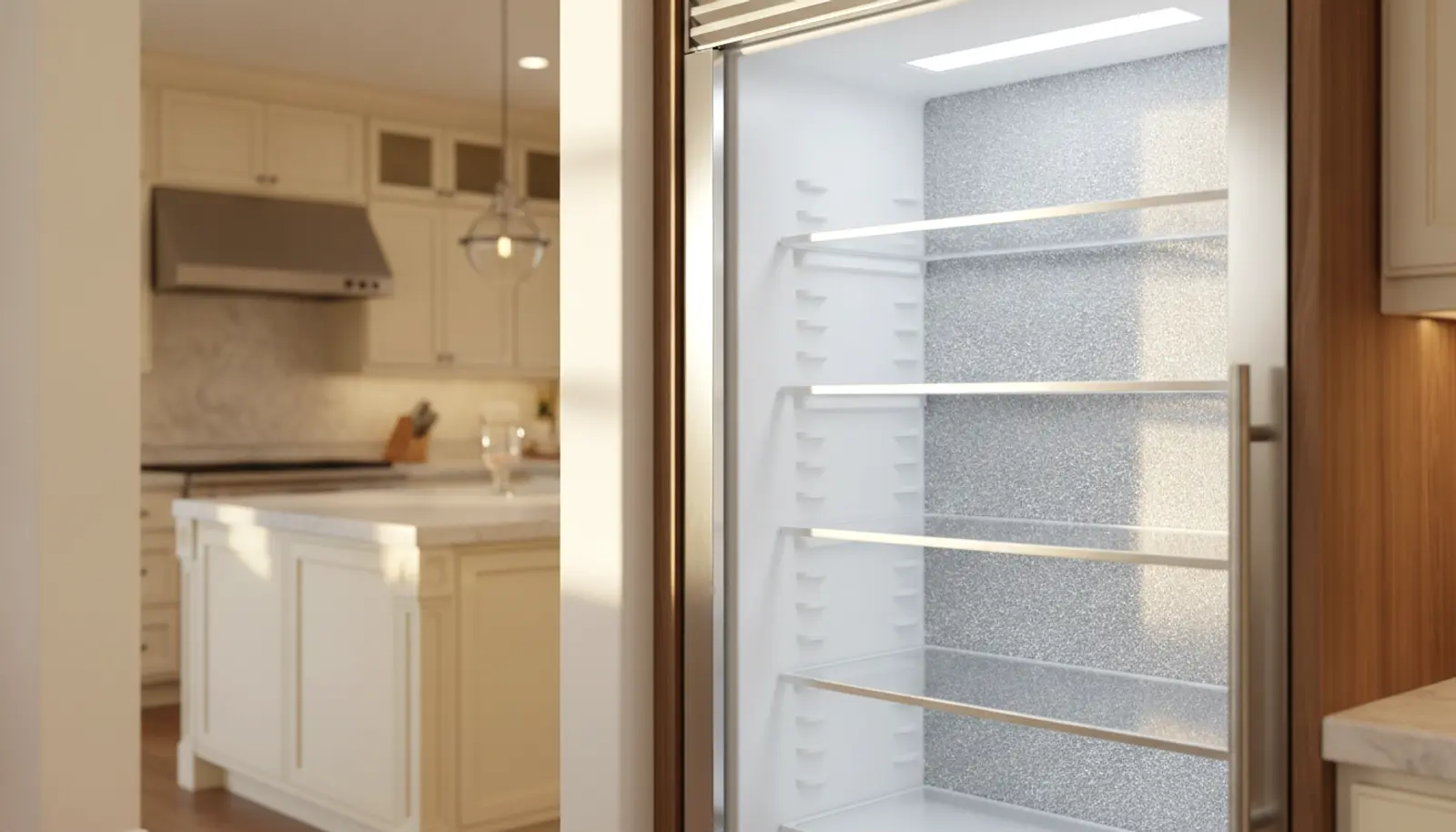
Sub-Zero Problems · Frost & Ice Buildup · Diagnostic · Southern California
Frost that keeps coming back points to one of three things: a defrost cycle that's stopped clearing the coil, a door that no longer seals, or a frozen drain. Our techs at Zero Degree Built-In Refrigeration read where the ice forms first, because the location usually names the cause before we touch a single part.
Mon–Sat 8am–8pm · Sun closed · Requests 24/7 online, phone & chat
The short version
Across the Southern California homes we cover, frost buildup is one of the more readable symptoms: ice on the coil and back wall usually means the defrost system, frost clustered at the door edges usually means the seal, and a sheet of ice on the floor of the compartment usually means the drain.
That readability is why we never just scrape and leave. Chipping ice clears today's symptom but not the reason it returned — and on these cabinets the coil is easy to damage with a screwdriver and a hopeful guess.
When to call usIf you're defrosting the freezer more than once or twice a year, or the frost returns within days of clearing it, the defrost system or a seal is failing. That's the point to call rather than keep chipping.

What's actually happening
The leading cause of buildup. A freezer is supposed to melt a thin layer of frost on a schedule; when the defrost components quit, ice accumulates on the coil and back wall until airflow chokes off.
A worn gasket or a tired magnetic latch lets humid air in around the clock. It freezes on the nearest cold surface, so frost near the door edges usually points here rather than to the defrost system.
When the defrost drain freezes, melt-water can't escape and re-freezes as a sheet at the bottom of the compartment. It often travels with a leak, which is a useful tell.
Packed-in food or a vent covered over can trap cold, humid air against one spot and frost it. Cheap to resolve, and worth ruling out before assuming a component failed.
How we diagnose
On the coil, the back wall, the door edges, or the floor of the compartment — each location points to a different cause, so the pattern is the first thing we read.
We check the components that run the defrost cycle together, because replacing one in isolation is how frost comes straight back.
If frost clusters near the opening, the gasket and magnetic latch are the likely repair, not anything electrical.
A frozen drain re-freezes melt-water into a sheet; we make sure water can actually leave before calling the job done.
We confirm vents aren't covered and air can circulate, so a simple loading issue isn't mistaken for a fault.
Where we see it
Built-in over-and-under (U), side-by-side (S), all-fridge (R) / all-freezer (F) Highest repair volume legacy line. Dual Refrigeration, magnetic door latch, vacuum condenser.
Built-in side-by-side and over-and-under Variants -2 / -3 (e.g. 650-2/3, 685-3, 695-3).
Built-in, tighter footprint; T=top-over-bottom, B=bottom config, I=ice Variants -2 / -3 exist. Mechanicals under bottom drawer near floor.
Built-in side-by-side, over-and-under, all-fridge/all-freezer; iconic grille
Open the full series repair guide that matches your cabinet:
Repair or replace
Frost buildup is almost never a reason to replace a Sub-Zero. The defrost components, the gasket, and the drain are all serviceable, and clearing the real cause restores the cabinet without going near the sealed system.
What it does deserve is prompt attention: ice that's allowed to keep building strains the system and can spread to a leak. Catching it as a defrost or seal repair is far cheaper than letting it cascade.
On the legacy lines we see most, frost and a tired door gasket tend to show up around the same age, so we check the seal and the defrost system together. Resolving both in one visit spares you a second call when the other half gives out a few months later. When the frost keeps coming back, schedule a Sub-Zero diagnostic and we'll check the defrost system and the door seal together in one visit.
You pay fair, market-average rates: a Sub-Zero takes the same skilled work as any built-in, so you're not paying a premium for the badge.
Ranges are estimates by model and fault; the exact price is confirmed on-site, and you approve the work before we start. No flat fees, no surprises.
Defrost and seal work sits at the affordable end of the scale — see what a defrost or seal repair typically costs by job.
Frost questions
Heavy buildup usually means one of two things: the defrost cycle has stopped clearing the coil on schedule, or warm, humid air is getting in past a worn door gasket or weak latch. Where the frost forms tells those apart — coil and back-wall frost points to defrost, while frost at the door edges points to the seal.
A trace is normal between defrost cycles, but a steady build-up that you have to chip away is not. It signals that the defrost system, the door seal, or the drain isn't keeping up, and it tends to worsen because the ice itself blocks the airflow that would otherwise keep things even.
You can let it thaw to buy time, but manual defrosting only clears the symptom — if the defrost system or a seal is the cause, the frost returns. We'd rather find why it's building up than have you chipping at the coil, which is easy to damage.
We see it across the BI built-ins, the 600 and 700-series cabinets, and the current Classic line — anywhere a defrost cycle and a door seal are doing daily work over years of use. Legacy lines are most common simply because they've had more time to wear.
It depends on whether it's defrost, a seal, or a drain, so we quote ranges by symptom rather than a flat fee. You pay fair, market-average rates: a Sub-Zero takes the same skilled work as any built-in, so you're not paying a premium for the badge. A gasket and a defrost repair sit at different ends of the scale, and you'll know which before any work starts.
Related
Mon–Sat 8am–8pm · Sun closed · Requests 24/7 online, phone & chat